Lip Shape and Volume

The lips play an important role in facial expression, balance, and overall appearance. They form the central part of the lower face and contribute to facial balance. Changes in this area over time can influence lip volume, shape, definition, and upper lip lines.

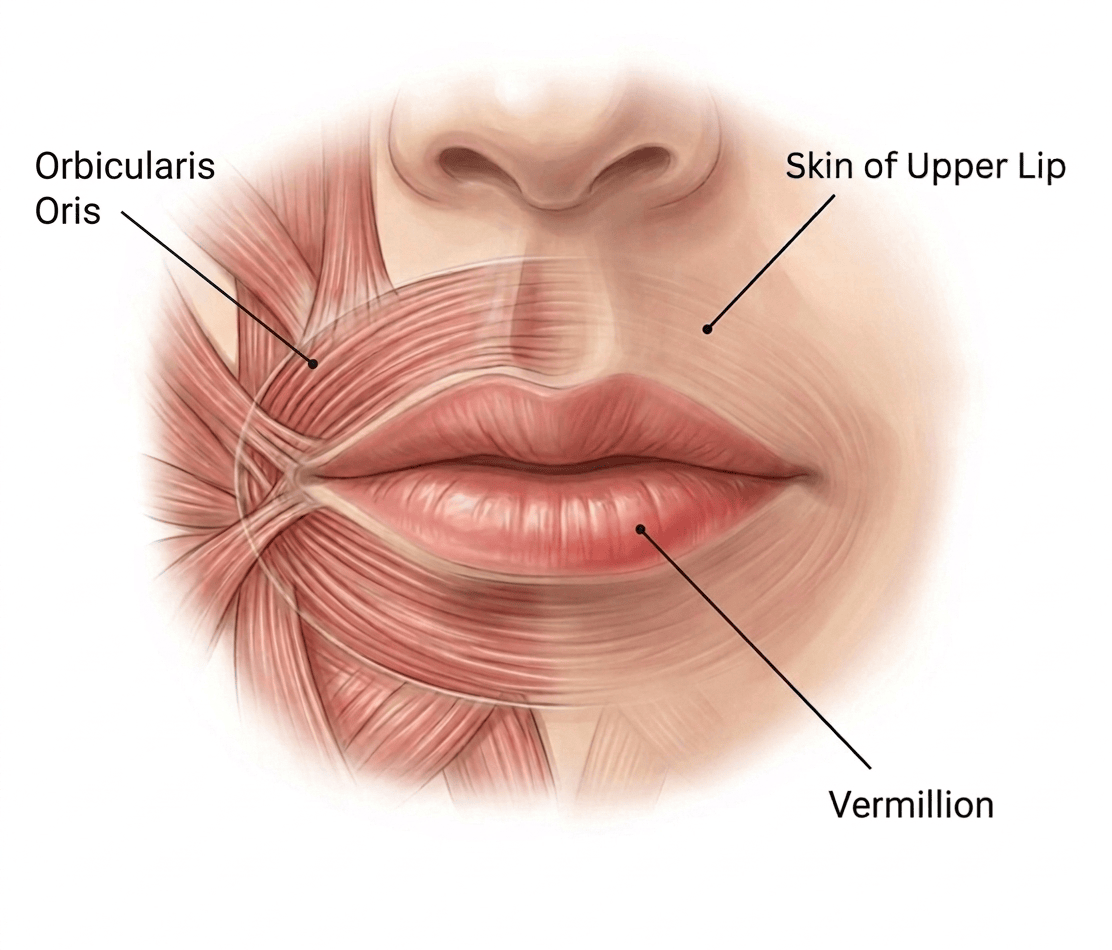
Anatomical diagram of the lips showing the vermillion, obicularis oris muscle, and surrounding soft tissue structures.

Anatomy of the Lips

The lips are composed of several anatomical layers, including the skin, connective tissue, muscle, and underlying support structure from the teeth.

The obicularis oris muscle surrounds the mouth and plays a key role in lip movement and expression. This muscle allows for actions such as speaking, smiling, and pursing of the lips.

The vermillion refers to the pink portion of the lips. This area contributes to the visible lip shape and volume, which helps support the skin surrounding the lips.

Together, these anatomical compartments contribute to the shape, movement, and overall appearance of the lips.

The Role of Lips in Facial Balance

The lips contribute to overall facial harmony and are closely related to surrounding structures such as the chin and jawline. Their shape, volume, and position influence how the lower face appears as a whole.


Skin and structural characteristics

The lips have a unique structure compared to other areas of the face. The skin is thinner and contains less oil-producing glands, making them more sensitive to environmental changes over time.

Changes in surrounding skin quality may also influence the volume of the lips and how upper lip lines appear.


Movement and facial expression

The lips are highly mobile and are involved in many facial expressions, including speaking, smiling, and eating from the obiculairs oris muscle. Repeated movement over time can influence the appearance of fine lines and wrinkles around the mouth.


Relationship to surrounding structures

The lips are part of the lower face and give overall balance in relation to the chin and jawline. The lip volume and position for overall facial balancing can be assessed using reference lines from the nose, chin and jawline.


How the lip changes over time

The appearance of the lips can change gradually over time due to shifts in underlying structure and soft tissue support. This may include changes in lip volume, definition, shape and overall size.

The lips are supported by teeth structures, and connective tissue in the surrounding areas of the lower face. Changes in these structures can influence lip position, contour, projection, and how the lips appear in relation to the rest of the face.

These changes are often considered as part of broader facial structure and volume changes during a consultation.


Other contributing factors

Factors such as genetics, lifestyle, and environmental exposure may also influence changes in the lips over time.

Learn the changes that occur with facial aging.


How the lips are assessed

During a consultation, the lips and upper lip lines are assessed in the context of overall facial balance. This may include consideration of skin quality, facial structure, and wrinkle formation, depending on individual concerns.

Book a consultation

Frequently Asked Questions

The lips contribute to overall facial balance, influencing how the lower face appears overall.

Changes may occur due to natural ageing processes, repeated movement, and shifts in structural support from the teeth and surrounding tissue. These changes can affect upper lip lines, lip volume, definition, and projection.

Loss of volume, lack of support from the structure of the teeth and connective tissue surrounding the lips can influence lip position, size and projection.

The lips are the central part of the lower face and their position can give help support overall balance in relation to the chin and jawline.